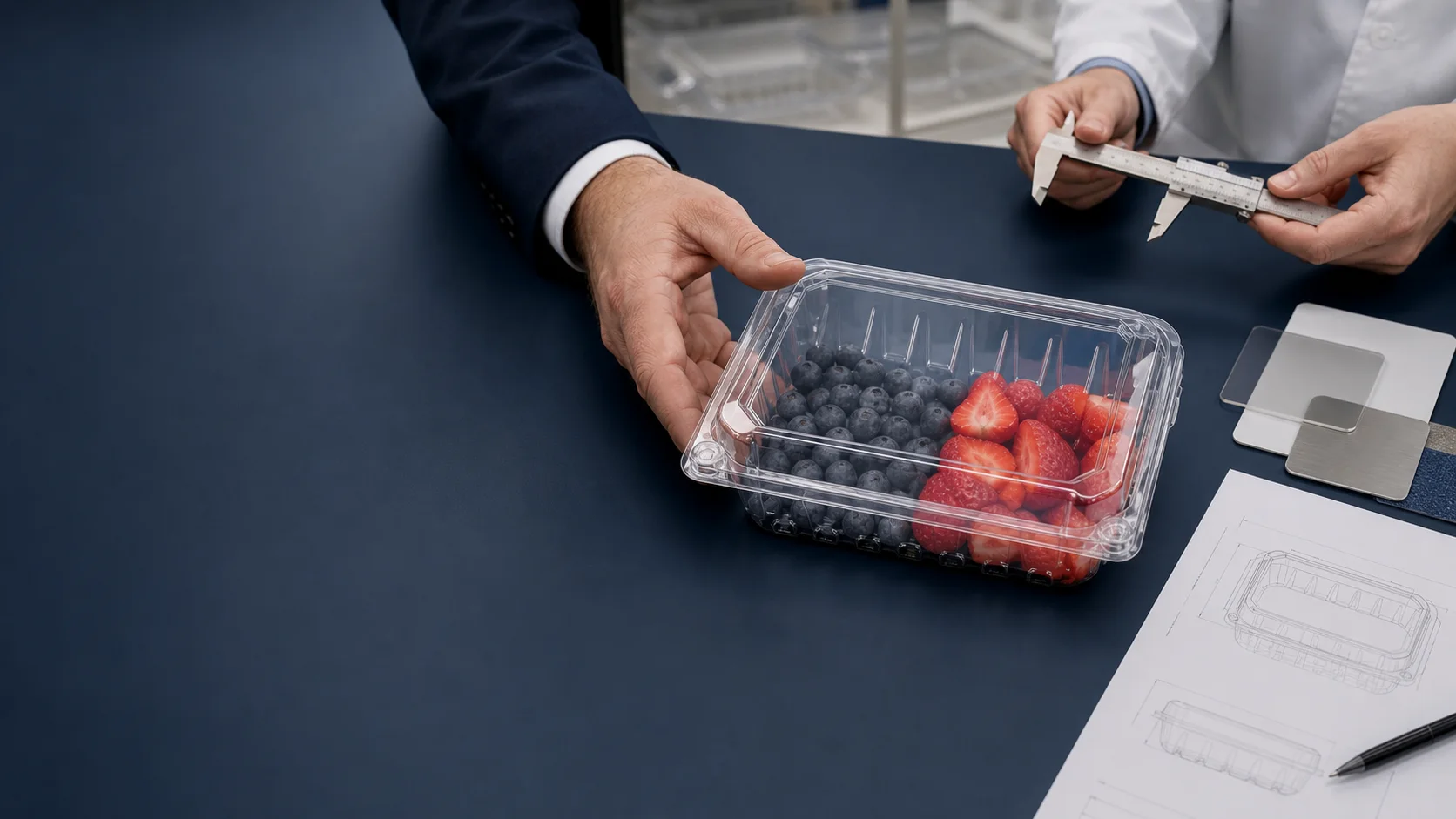

When an enterprise sets a shelf-life target, the supplier needs more than a number of days. The brief should identify the exact food, starting quality controls, filling method, target atmosphere, storage temperature, distribution excursions, retail display and unacceptable failure modes.
Barrier material is only one part of the system. Tray geometry, seal-flange flatness, lidding compatibility, sealing parameters, residual oxygen, cold-chain control and operator consistency can all affect the outcome. A material name alone cannot guarantee shelf life for a specific food.
Raytek’s black PP fresh-food trays can provide a structural and application reference. If a project requires EVOH or another multilayer barrier structure, confirm the exact construction, target barrier measures, compatible lidding, manufacturing feasibility and required documentation before quotation and sampling; do not infer the material construction from a website image.
A validation plan should cover appearance and dimensions, seal window, leak or seal-integrity checks, stacking and case pack, distribution simulation, temperature monitoring, and food-quality or microbiological review at defined intervals. The enterprise quality team and appropriate specialists should approve the method, sample size and acceptance criteria.
The final purchasing specification should record the approved tray, material construction, lidding, equipment-parameter window, packing atmosphere, storage and distribution conditions, and change-control requirements. That is how a shelf-life commitment becomes a repeatable system rather than a claim attached to one resin name.
Next step
Preparing an enterprise packaging brief?
Share the food, annual volume, packing process, destination market and required launch timing. Raytek can help frame the specification and sample plan.